
Trout Unlimited was recently at TomKat Ranch doing monthly streamflow and annual steelhead monitoring. We are excited to share that nearly 200 steelhead trout were found…
Science and Management Updates from the Field and Creek at TomKat Ranch
10/16/2026
By: By Hayley Strohm, TomKat Ranch Regenerative Science Coordinator
Trout Unlimited was recently at TomKat Ranch doing monthly streamflow and annual steelhead monitoring. We are excited to share that nearly 200 steelhead trout were found in the study area! Studies conducted in 2023 and 2024 found only a handful of fish. While we don’t fully understand what’s driving this uptick in steelhead, we are excited to see the population increase and are developing an upper watershed restoration plan using process-based methods to further improve our land and creek health for our fish friends.
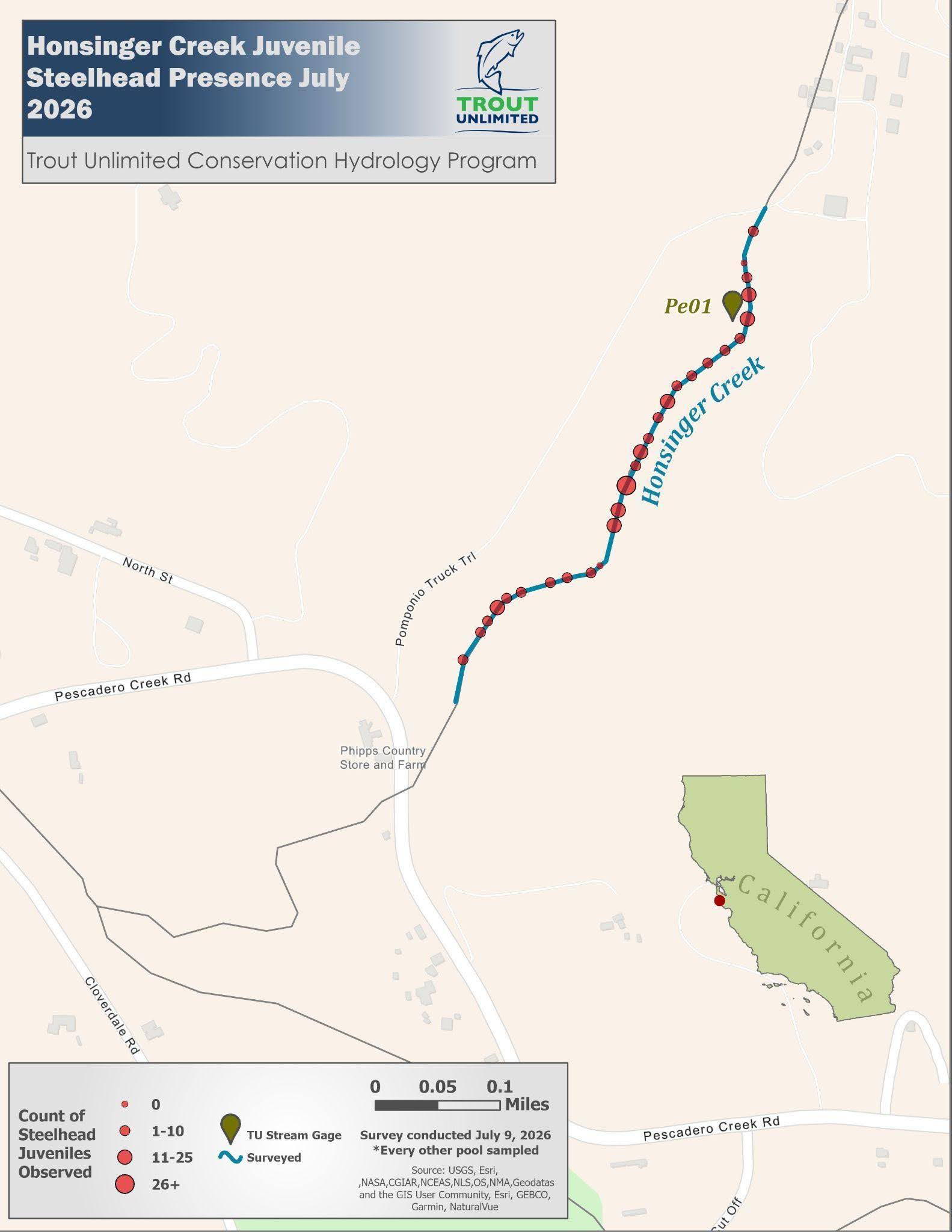
Results from TomKat Ranch “Honsinger Creek Juvenile Steelhead Presence July 2026” Trout Unlimited Conservation Hydrology Program.
Managing for Coastal Prairies
Coastal prairies provide diverse habitat for many species, yet this habitat type is in decline due to conversion, development, and shrub encroachment. In coastal San Mateo County, where TomKat Ranch is located, shrub encroachment threatens many ranchers’ and land managers’ rangelands. Defending against shrub encroachment and managing pastures as grasslands offers many benefits—maintaining quality forage for livestock and vegetative diversity and structure that grassland-obligate species rely on for survival.
To achieve these goals at TomKat Ranch, we began implementing a new brush management plan this year to increase and enhance coastal prairies, one of our long-term goals.
In the past (prior to 2017), our brush management regime consisted of regularly mowing pastures in the fall and treating each pasture every couple of years to maintain grass cover and prevent shrub and tree encroachment. In 2017, we took a break from that practice to trial several other brush management treatments that required less mechanical intervention, including feeding hay bales with high-density cattle grazing to defoliate brush, applying different seed, compost, or minerals, targeted goat grazing, and prescribed fire. We implemented these practices on a relatively small scale and across a variety of trials to understand their efficacy in maintaining or restoring pastures to grasslands and coastal prairie.
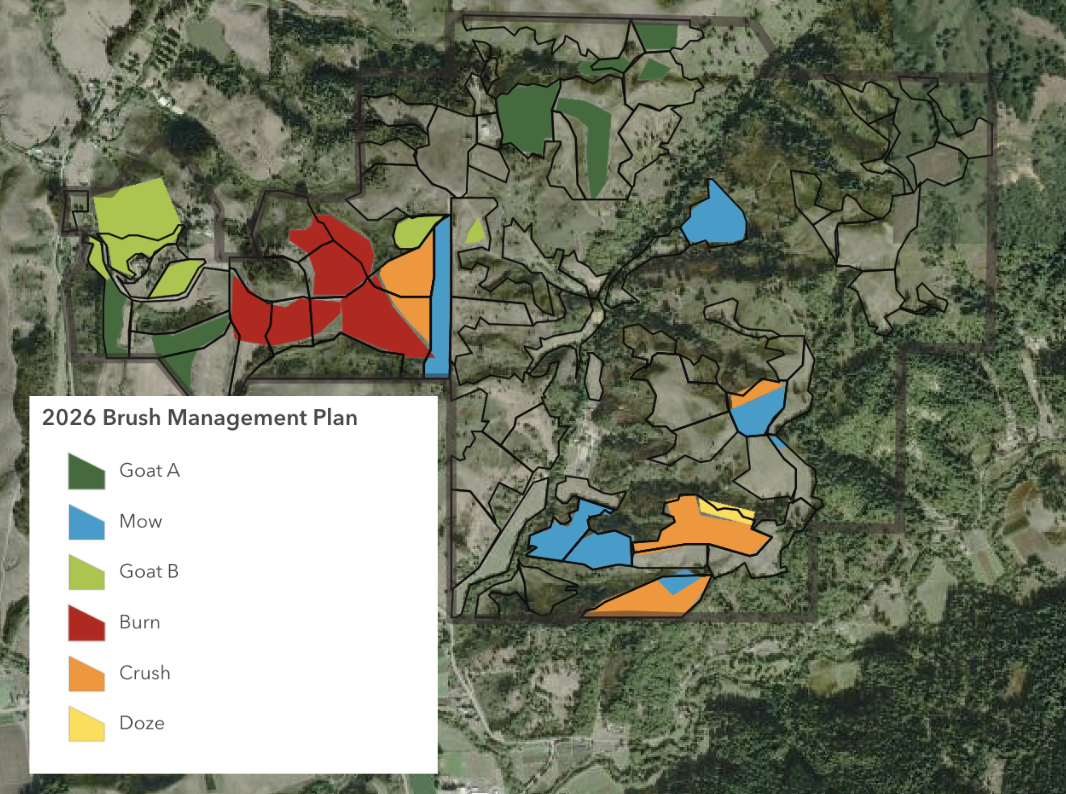
Color-code brush management treatments at TomKat Ranch.
In our prescribed fire and goat grazing trials, we saw the success of targeted goat grazing and prescribed fire for reducing coastal shrub, and saw even more success when layering the two practices.
However, we also learned that treating large, hilly coastal prairie landscapes with rapidly encroaching coyote brush and poison oak, while providing enough forage for our grass-fed cattle herd, was a logistical challenge that made it hard to stay ahead of the brush. So, this year, we decided to return to mechanical intervention to catch up on pasture maintenance. We set a goal to mechanically treat 100 acres of brush, along with targeted grazing and a planned prescribed burn under a CalFire vegetation management plan.
We used multiple mechanical tools, including a brush crusher and aerator, a remote-controlled mower masticator, and a rotary mower. We also cut about 2 miles of masticated lines to better facilitate goat grazing next season. We used drone imagery to measure baseline brush cover, and we will continue to use it to monitor these practices for brush-reduction efficacy. We also layered the practices on top of our legacy monitoring points, which will continue to give us insight into how our soils, vegetation, and bird communities respond to treatments. We are looking forward to sharing our insights and findings as we continue to monitor and learn.
Photo Series
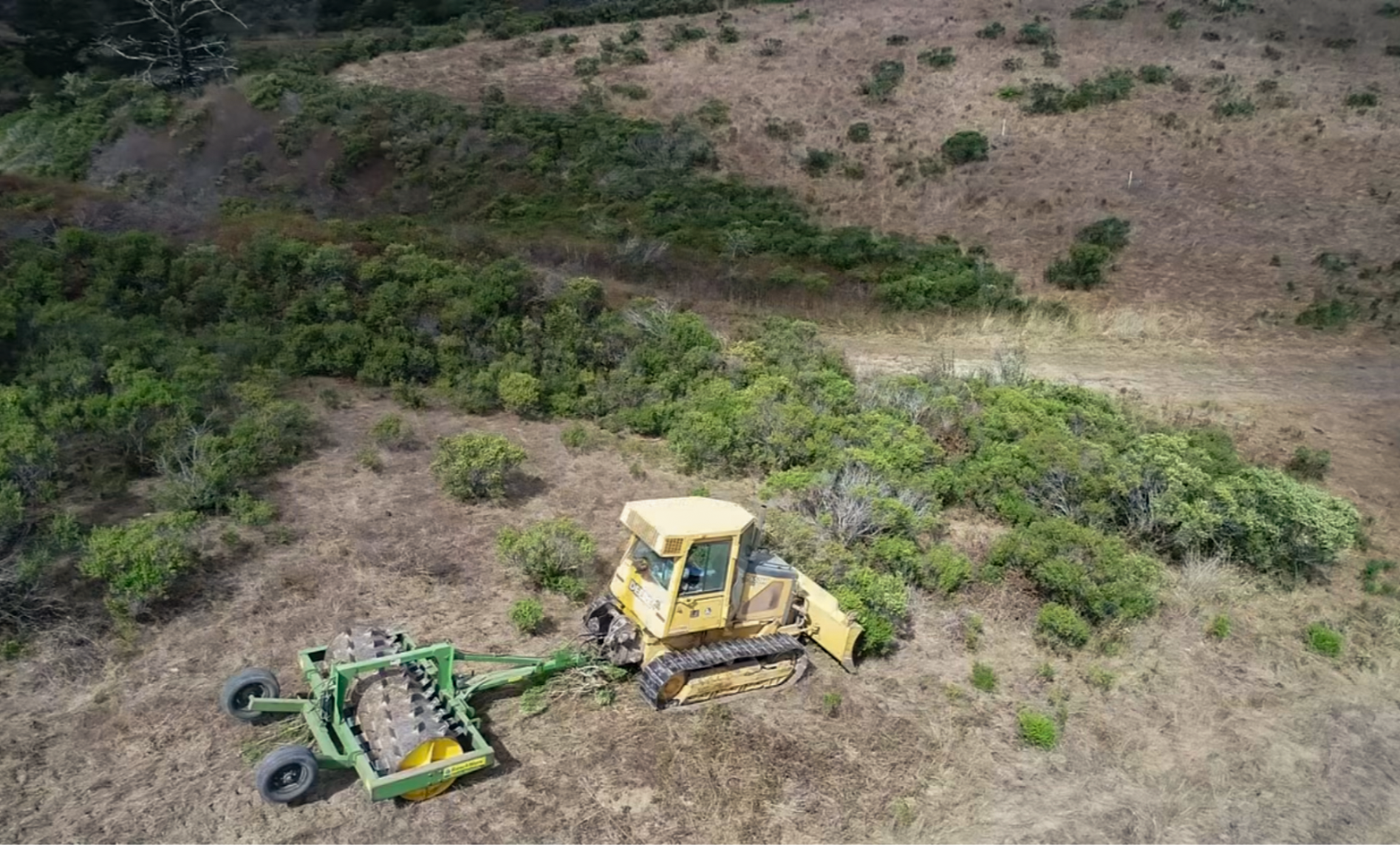
Shannon Waldron, Land & Livestock Assistant at TomKat Ranch, driving the bulldozer pulling the brush crusher.
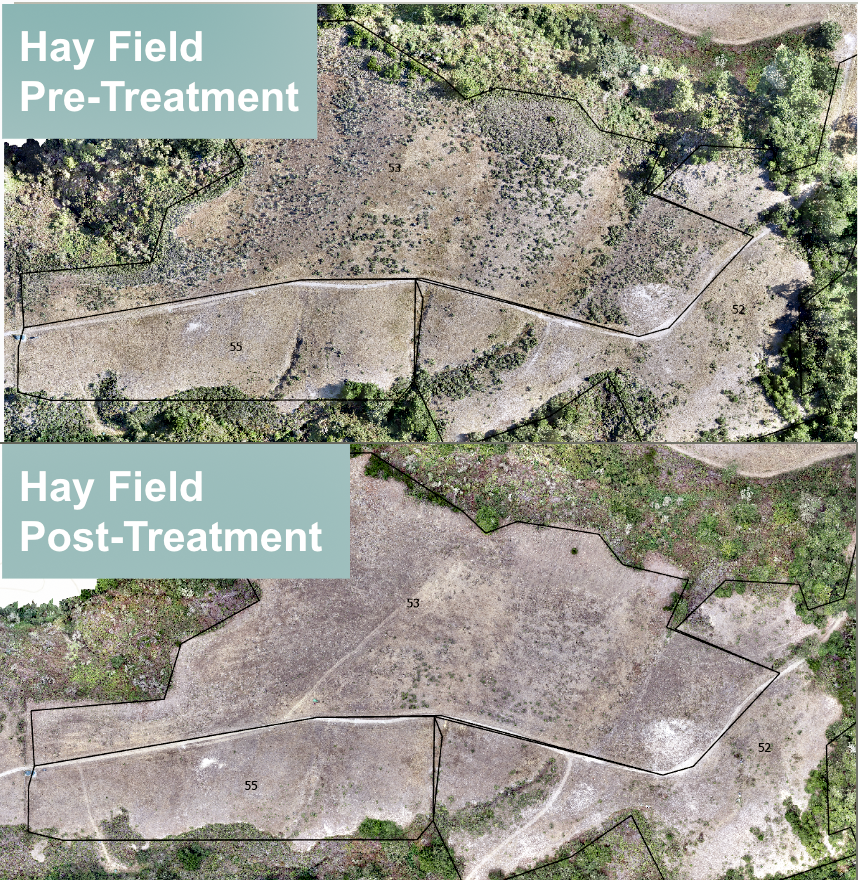
The before-and-after results from the Hay Field pasture crushing treatment at TomKat Ranch, 2026.
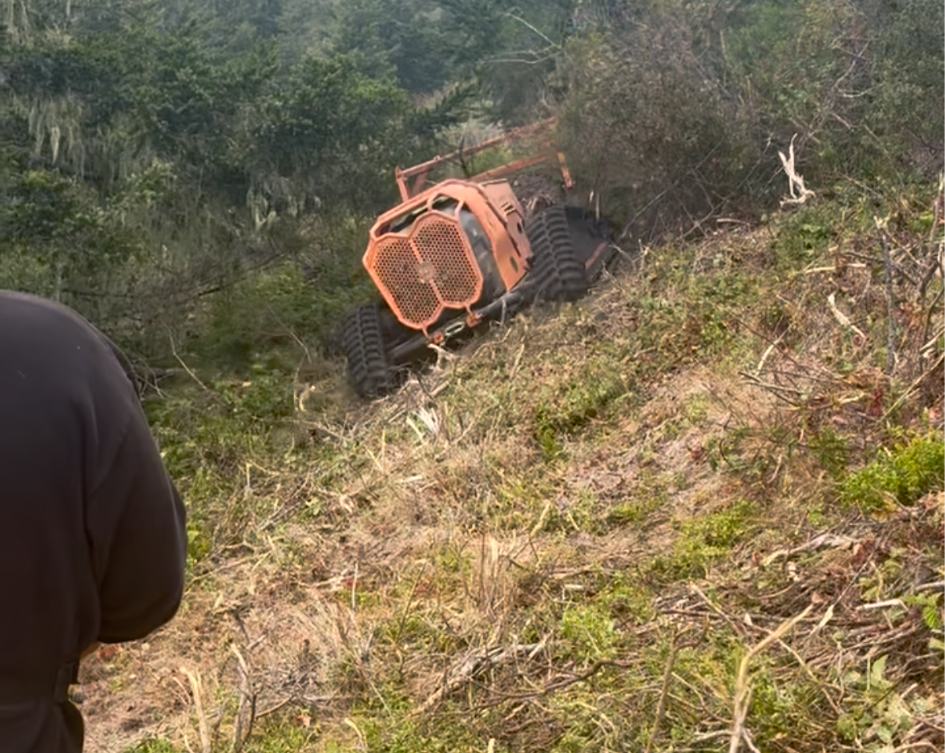
Using a remote-controlled masticator to cut lines in heavy brush to facilitate targeted goat grazing at TomKat Ranch. Now the shepherds can more easily build storm shelters and fence off high-density paddocks for best brush grazing.
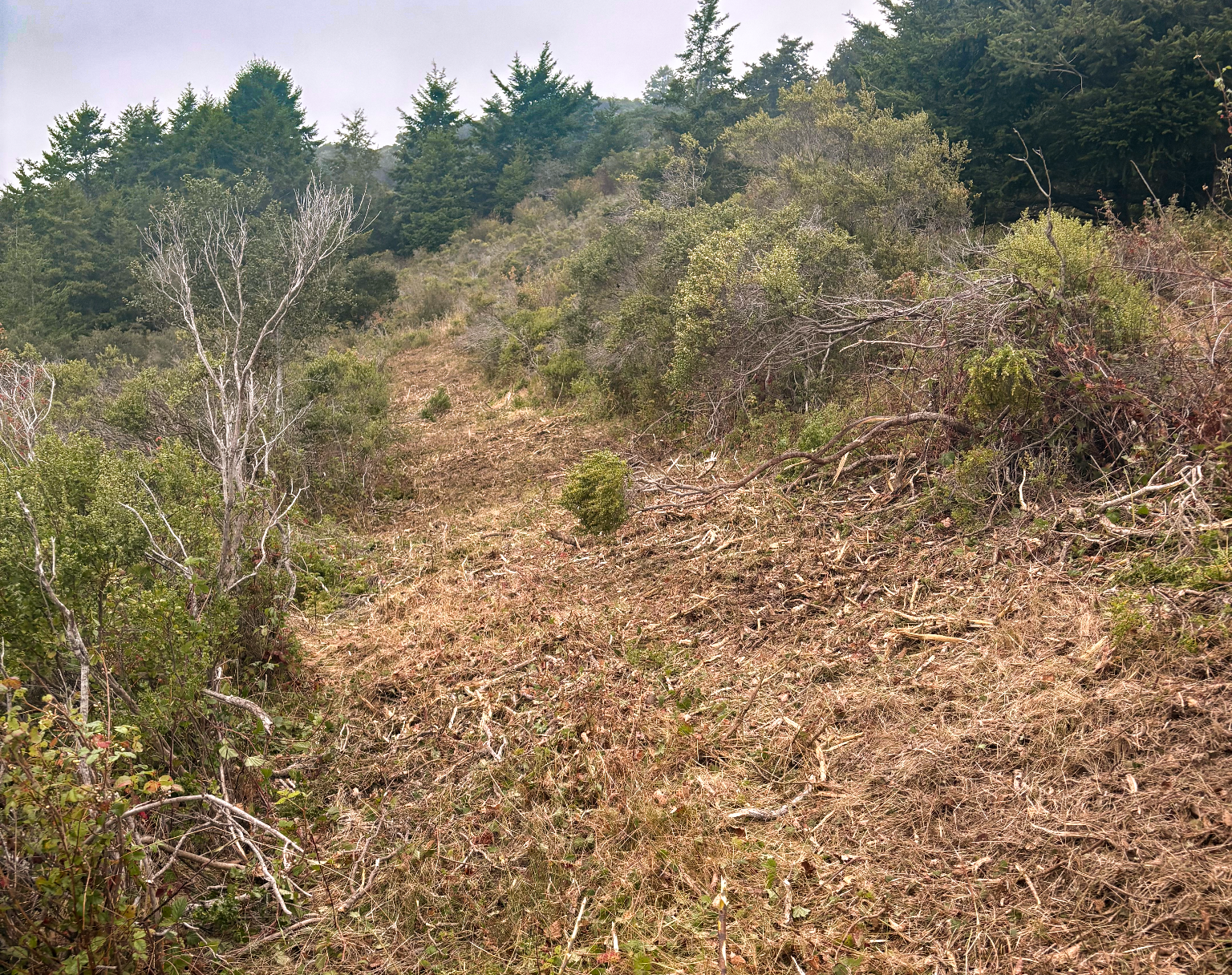
One of the cut lines after mastication at TomKat Ranch.