
As part of our goal to provide healthy food on working lands in a way that regenerates the soil and inspires others to action…
From Tip to Tail: Whole Animal Utilization
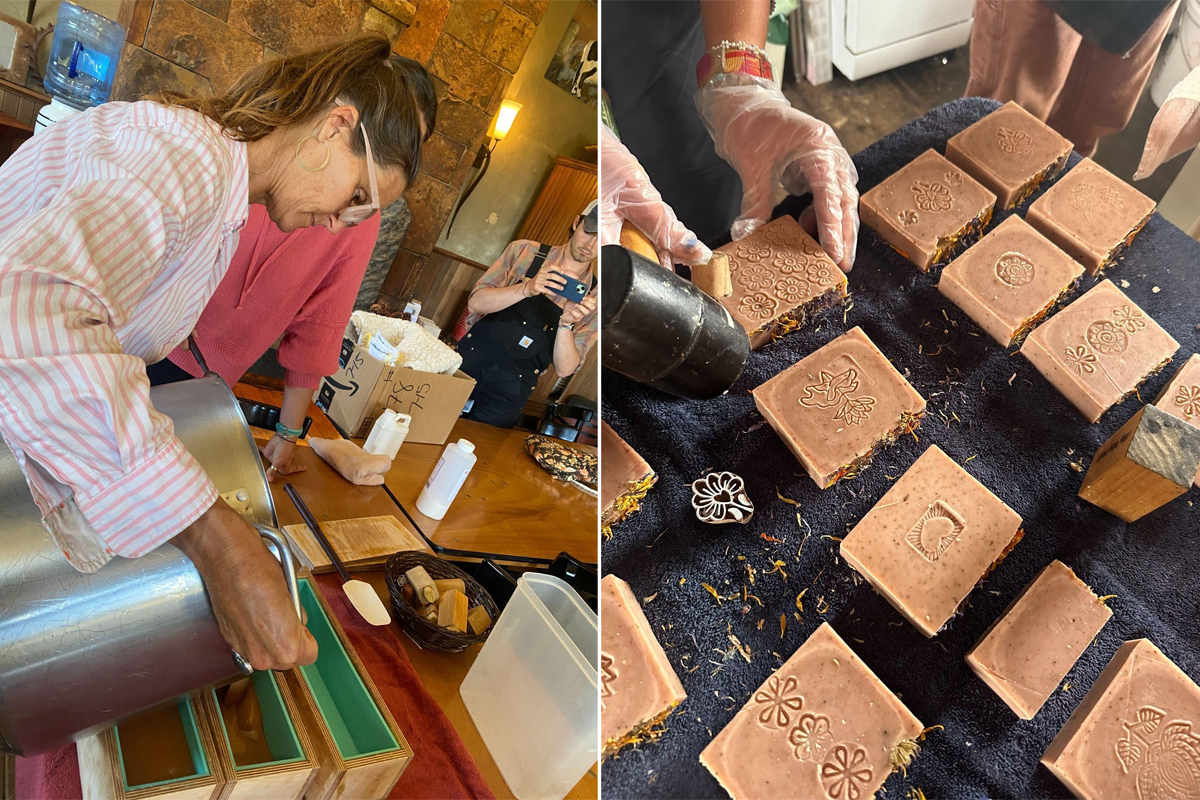
Courtney Woodrow, owner of Gaia Essentials in Pescadero, shows TomKat Ranch interns how to make fragrant soaps from our LeftCoast GrassFed beef tallow as one way to use a whole carcass. Photos by Kathy Webster.
10/16/2026
By: Shannon Waldron and Kathy Webster
As part of our goal to provide healthy food on working lands in a way that regenerates the soil and inspires others to action, we sell our certified grass-fed beef (LeftCoast GrassFed) to local and surrounding communities. We seek to educate and share the benefits of regenerative grazing (in both land health and human health) to build demand for regenerative, grass-fed meats and to connect to new markets. As part of this education, we bear in mind all parts of the animal as we seek to achieve whole-carcass utilization. This includes hides, bones, blood, offal, tails, skulls, horns, fat, tripe, and many other parts.
Consider that a steer typically weighs 1200 pounds, and roughly 420-540 pounds goes into packaged beef. What about the rest? Producers often undervalue it and have it hauled off to a rendering facility. In contrast, we always look for ways to celebrate and create value from the entire processed animal.
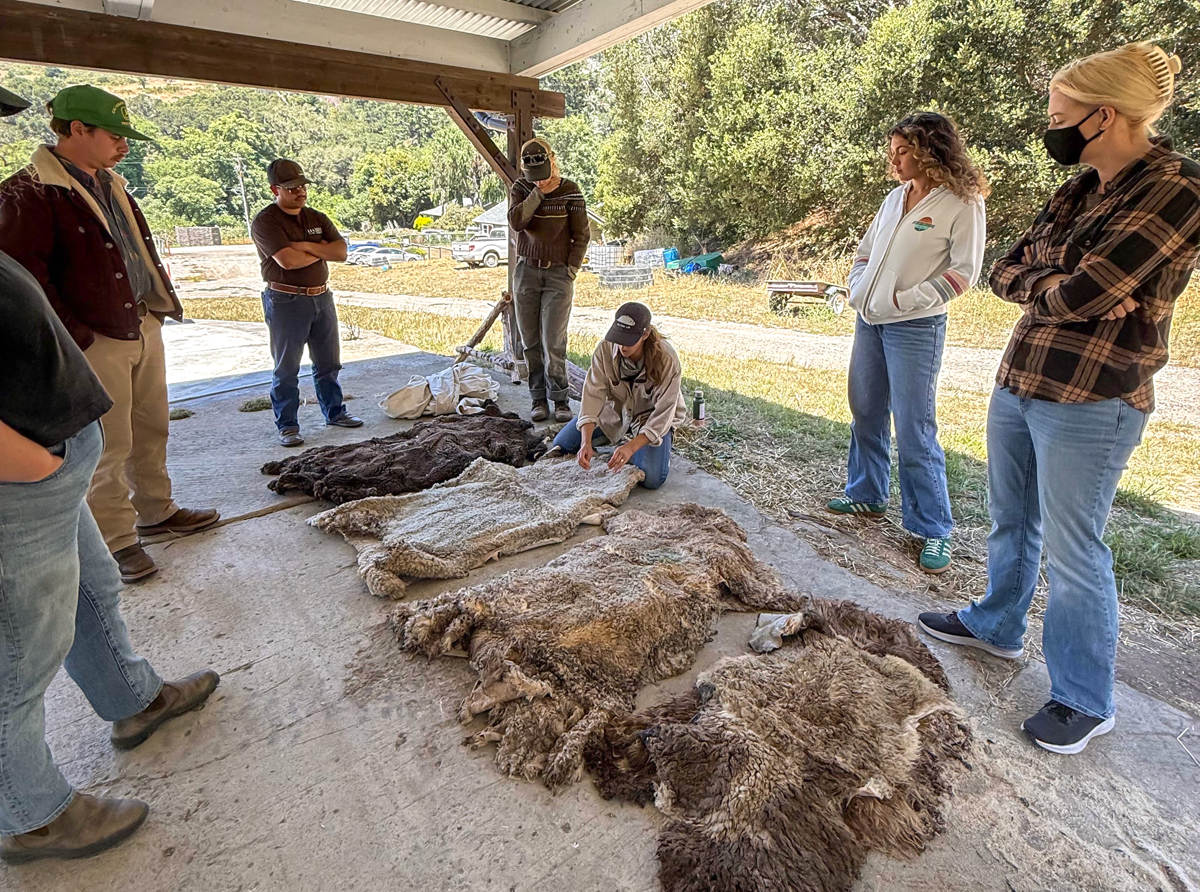
TomKat Ranch 2026 interns learning about tanning goat hides. Photo by Bella Newcomb.
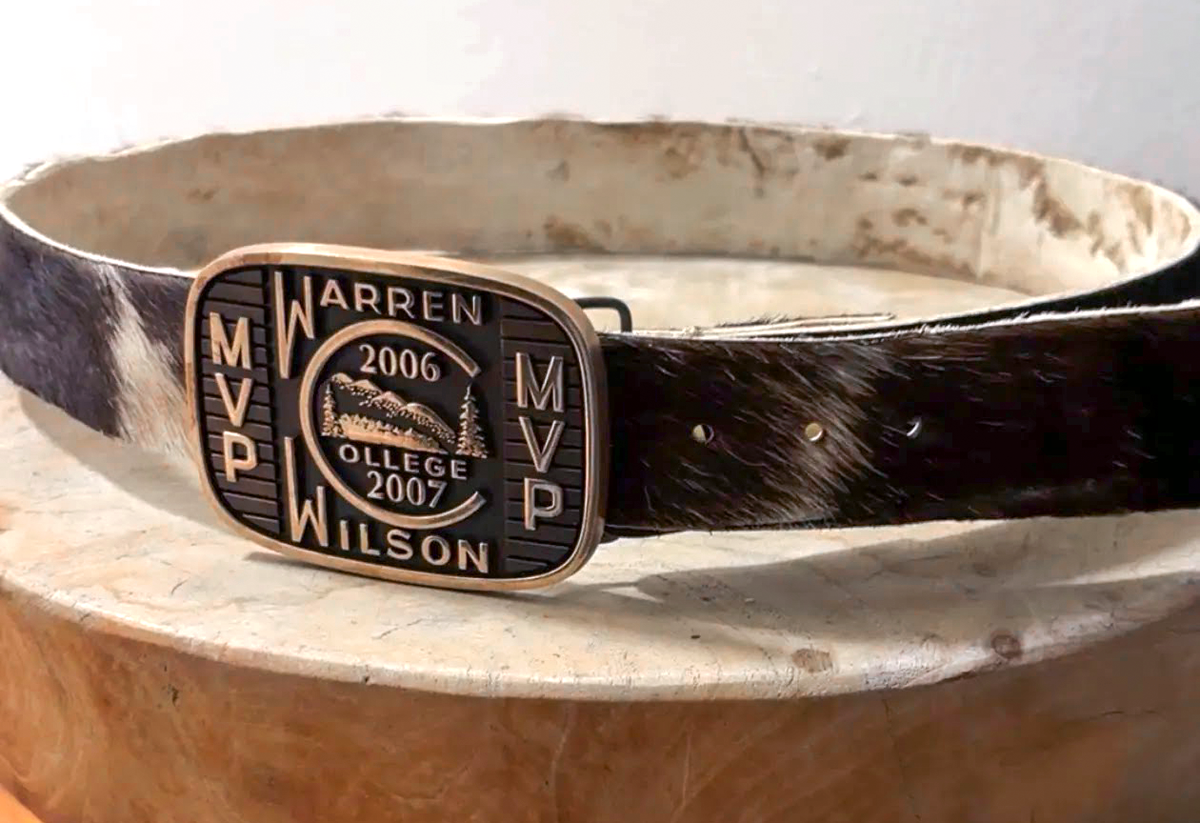
Let’s start with the hides. We host a hide tanning workshop as a way to get hands-on with the process, learn the basics of working a hide, and become more familiar with the skill from start to finish. Over the years, we have turned our hides into rugs, educational displays, pillow covers, and a few belts, but there are so many more products we could make from our leather!
Then there is the fat. Fat can be rendered into amazing tallow, both for cooking and for making beautifully creamy soaps, balms, and candles.
Bones can make some of the most delicious and nutrient-dense broths. Grass-fed bone broth provides a rich source of easily absorbable protein and collagen. And when roasted and slow-cooked, the minerals released from the bones are beneficial for those looking for a nutrient-dense broth that can be consumed straight up, or added to various recipes for extra flavor.
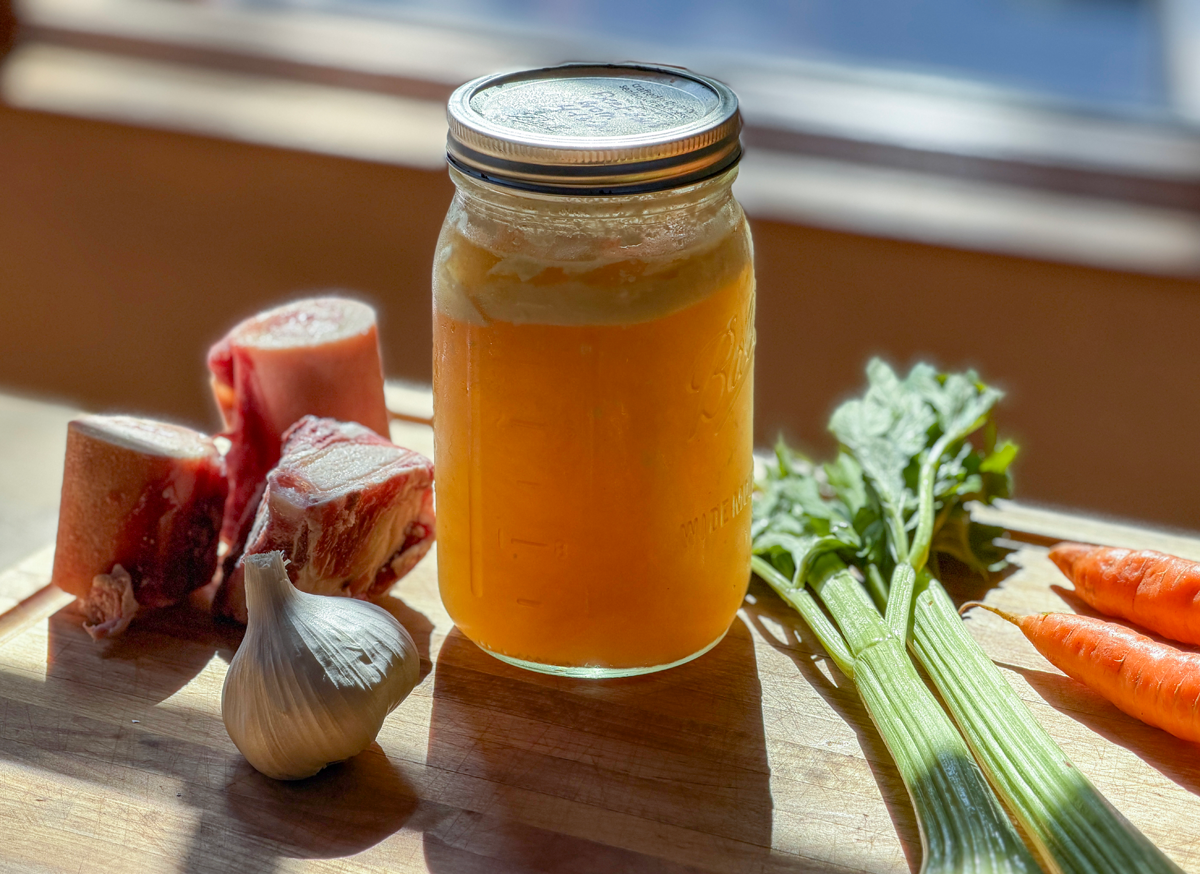
Beef bone broth in a jar. Photo by William Milliot
Offal are the organ meats. In many cultures, these are considered delicacies. Think beef cheek tacos, oxtail stew, liver, heart, tripe. Fortunately, many of these organ meats are in demand in the Bay Area, a culturally rich region. However, some parts, like hearts and liver, don’t sell as quickly. To offset that, we use hearts and liver in a blended ground beef with 5% liver and 5% heart, called ‘Primal Blend’, and it is quite popular. One of our team members, Dakota Glueck, has his own pet food line, Sol Fed Ranch, that uses bones, heart, liver, and tripe in their much-desired dog food.
Another way to maximize the use of all parts of the carcass is to educate people about different cuts of meat. Many meat eaters are only familiar with popular selections like New York strips, ribeyes, and tri-tips. We enjoy collaborating with chefs who reach out to us with questions like, “What cuts do you have in abundance?” These creative cooks can take a beef shank, for example, and turn it into flavorful dishes like Osso Buco over creamy polenta or hearty, nutrient-dense beef barley soup.
Utilizing the whole animal honors its life, minimizes waste, and emphasizes resourcefulness. We are committed to building local relationships to find meaningful uses for every part of the animals we care for and raise.