
Working with Mukethe has been one of the highlights of my time at TomKat! Mukethe is an incredibly talented shepherd and land steward, but most importantly, she is a worldbuilder.
TKREF Intern Observations: Working and Worldbuilding with Mukethe
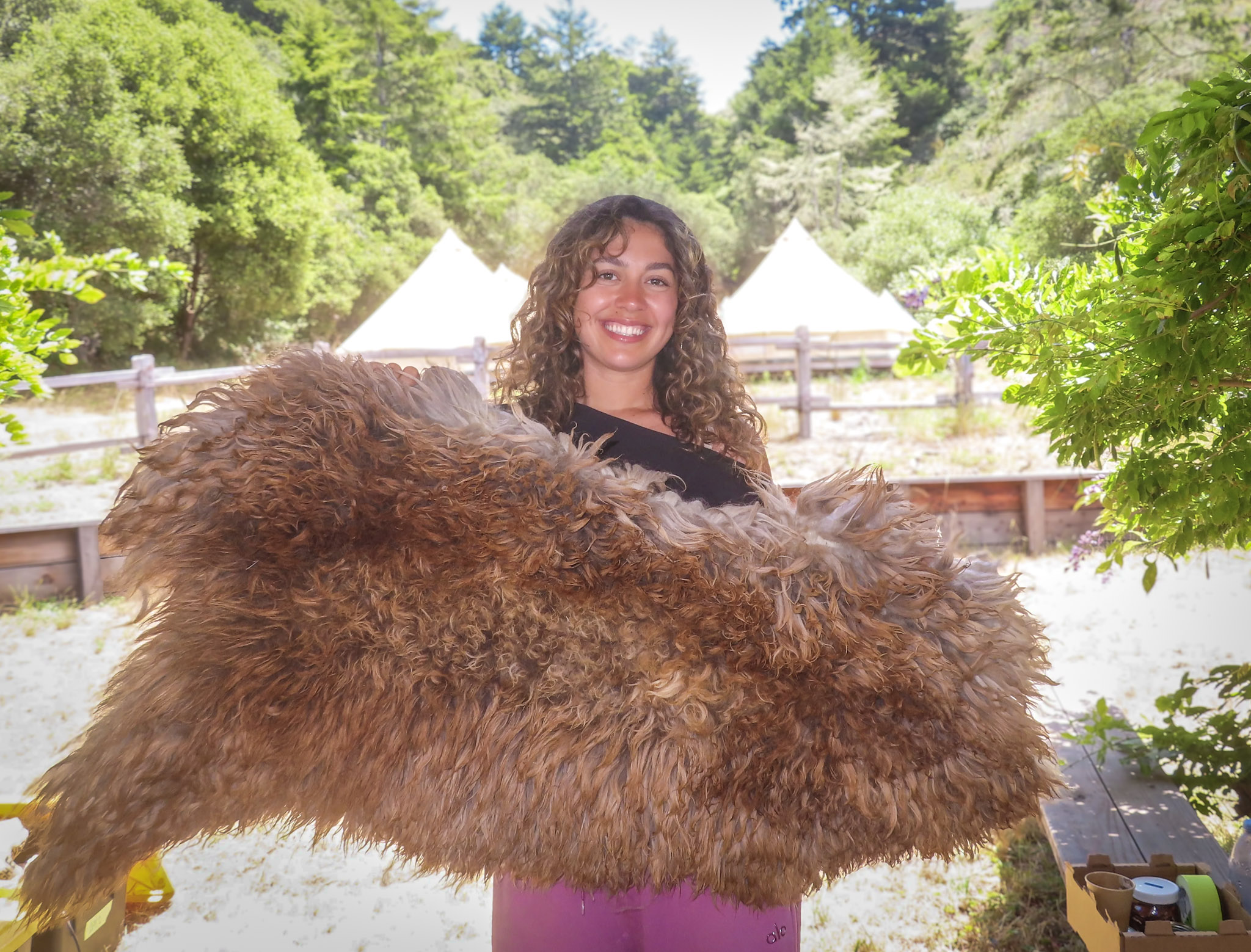
Abby Garewal proudly displays a goat hide she tanned herself during a tanning workshop at TomKat Ranch.
08/25/2026
By: Abigail Garewal
Working with Mukethe has been one of the highlights of my time at TomKat! Mukethe is an incredibly talented shepherd and land steward, but most importantly, she is a worldbuilder. From the first time I worked with the small ruminants team, her commitment to collective learning and relationship building was evident through interactive lessons on low-stress stockmanship, rapid-fire pop quizzes, and friendly competition among staff. It’s clear that she carries a deep sense of love and care for the goats that challenge the norms of conventional animal husbandry and inspire others (including myself) to action.
Spending time learning from Mukethe has reaffirmed my belief that our greatest task in improving material conditions is to collaborate and participate with the land rather than dominate it. I now understand stockmanship as an art that deeply intertwines animals, people, and the land we steward. I’m so grateful to have a mentor as thoughtful and experienced as Mukethe as I enter the world of regenerative agriculture and continue to practice environmental stewardship. Mukethe is the G.O.A.T. of goat shepherds!!!
Abigail is a 2026 Summer intern at TKREF. She was raised in a multigenerational family of hay farmers in Imperial Valley, California, a rural agricultural community in the U.S.-Mexico borderlands. Being deeply immersed in the agricultural industry taught her that land and food systems are not abstract concepts but are very much intertwined with lived experience, culture, and history. She hopes to better understand how farming can be structured to work in harmony with local ecosystems, promote long-term resilience, and serve as a praxis for land restoration.