
When monitoring regenerative landscapes, success often emerges in dynamic and non-linear ways. At TomKat Ranch, and across the Rangeland Monitoring Network, we measure soil dynamic properties like carbon, water infiltration, and bulk density
Celebrating Successes in Riparian Forest Restoration
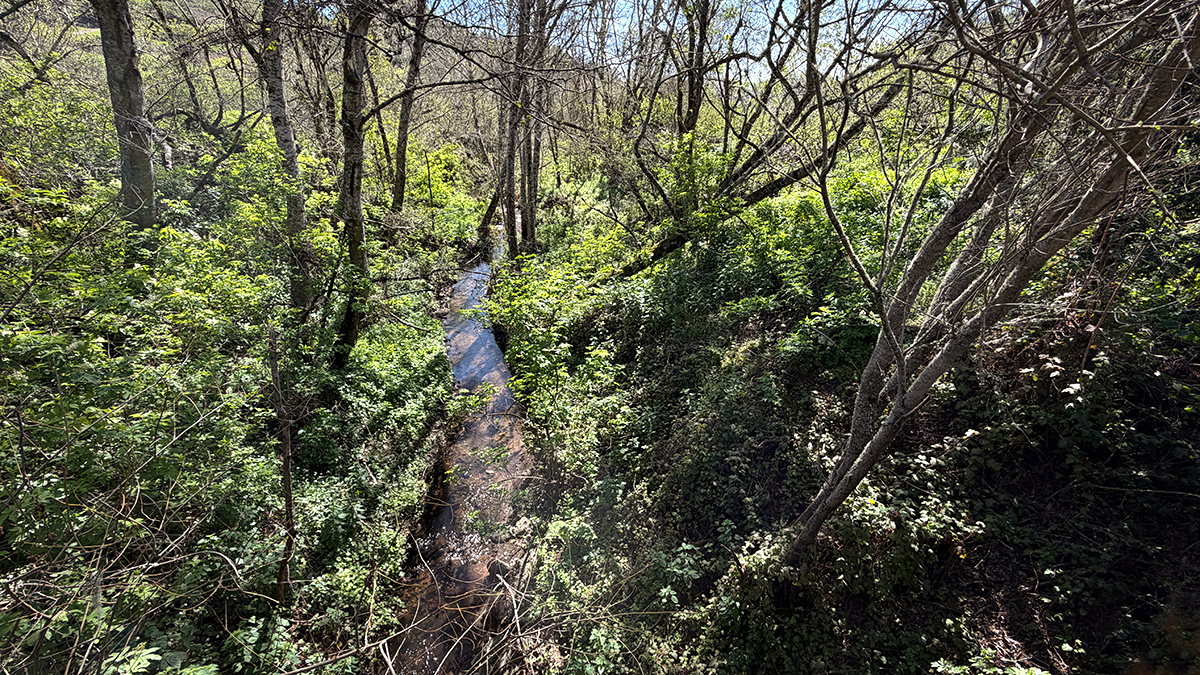
Honsinger Creek, the ranch’s primary riparian corridor, is beginning its spring leaf-out just in time for the return of summer migratory birds.
03/27/2026
By: Hayley Strohm
When monitoring regenerative landscapes, success often emerges in dynamic and non-linear ways. At TomKat Ranch, and across the Rangeland Monitoring Network, we measure soil dynamic properties like carbon, water infiltration, and bulk density; we look at vegetation cover; we can pull out functional groups like shrubs or perennial grasses or invasive weeds; and we measure bird abundance and diversity. When we put these metrics together, we have a pretty comprehensive snapshot of the ecological function of the landscape and when we look at the data across the network, we get an amazing view of ecological function across California’s rangelands .
The land at TomKat Ranch, as in many places in California, is complex and dynamic; similarly, our metrics are complex, relying on many levers, such as climate, rainfall, time of year, heterogeneity within sample plots, variability, wildlife population dynamics, migration, grazing management timing and intensity. While some metrics, like perennial grass cover, have shown clear improvement, some metrics, like carbon, tell a more nuanced story. As a curious land manager, I am always trying to tease apart and understand the levers of change in each metric, at each monitoring point. Was it the time of year that we grazed that made a difference? Was it the density of cows? Was it the rest period? Was it something completely outside of our control like slope, aspect, rainfall, temperature or the boom or bust of rodent populations? Sometimes I get so caught up in the details of the data and the management, that I forget to step back and look at the landscape as a whole.
I was caught up in such details, when I started writing our renewed Habitat Management Plan. While updating our current goals and objectives, I reflected on past plans including our Landscape Conservation Plan and Carbon Farm Plan and noticed both had an objective to increase riparian vegetation buffers, a common and multi-benefit conservation practice, with a metric that is measured in acres.
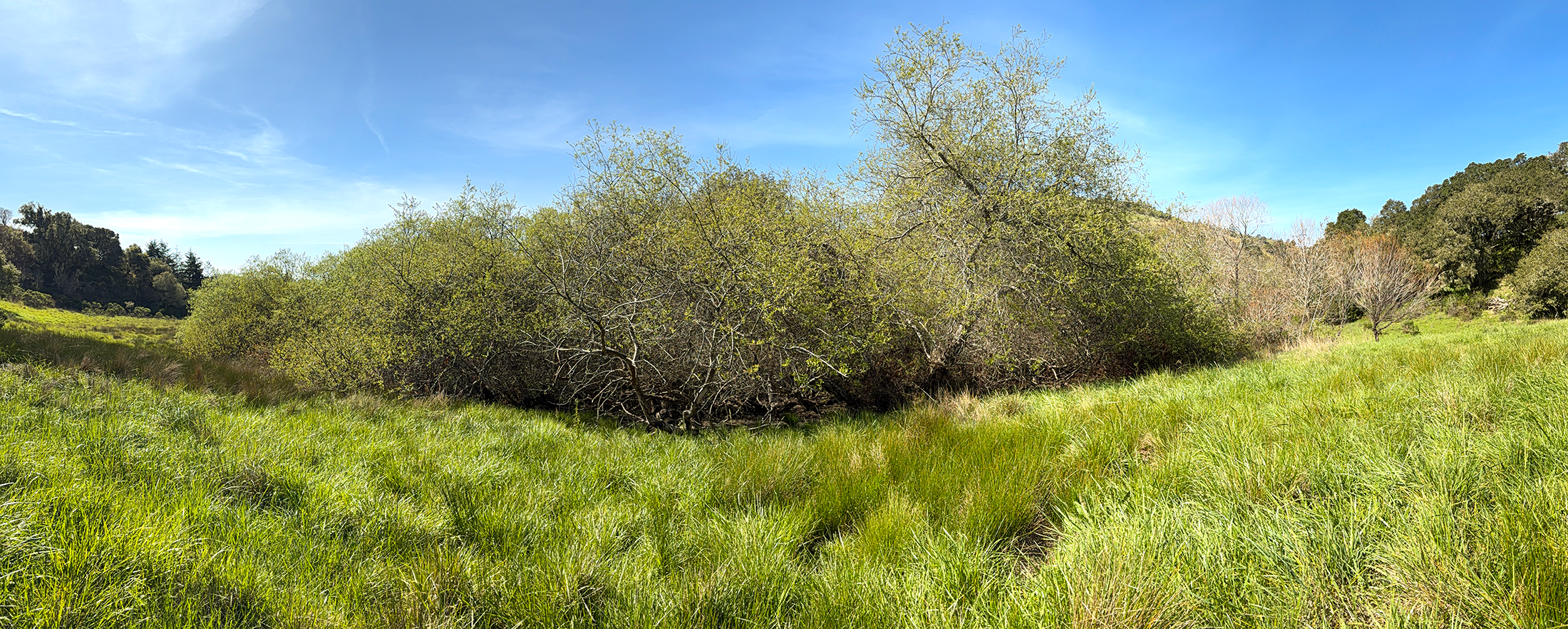
Willows growing in the riparian area of the Wild Rose Pasture.
A brief note on riparian vegetation restoration, before I continue my story… riparian restoration has many benefits. The suite of riparian restoration practices can create complexity in rivers and creeks to slow water, reduce erosion, provide shade cover and creek structures, and supply shelter and food resources for riparian wildlife like many of our breeding song birds, aquatic invertebrates and anadromous fish. Riparian buffers can create both biological and physical filtering of water pollutants and sediments, which improves water quality and captures carbon. The COMET-planner (used for our Carbon Farm Plan to estimate carbon sequestration potential for conservation practices) suggests that Riparian Forest Buffers can sequester 2 tonnes of CO2e per acre per year. We also see the co-benefits of riparian forest restoration across the globe in this meta-analysis by Dybala et al (2018), showing increases in bird habitat and carbon stocks, above and below ground, in revegetated riparian zones. Acres of riparian forest restoration have a huge impact!
Now I return to the story of what we learned at TomKat Ranch. In 2011, when Point Blue Conservation Science wrote TomKat Ranch’s first conservation plan, Point Blue used a map of riparian soils as a baseline to understand where riparian vegetation had occurred on the ranch before development and land conversion. In that resource inventory, we found a total of 75 acres of riparian soils yet only 26 of those acres growing riparian vegetation, and 11 acres of riparian soil permanently lost when the ranch’s original headquarters were built.
Why the discrepancy between riparian soils and riparian vegetation? Stewards of the land before it became TomKat Ranch prioritized production, extracting resources and using equipment to alter the land to align with an industrial farming model. It was common practice to remove wood and riparian vegetation for faster water flow and reduced flooding, the adjacent floodplains were mowed and tilled for row crop and hay crops. Cattle and horses had unrestricted access to the creek as a water source, and the native vegetation was grazed out. A big part of TomKat Ranch’s switch to regenerative agriculture was to change that old management paradigm. Using our foundational landscape conservation plan, we outlined priority restoration projects, using both active planting practices, and passive restoration projects to bring riparian vegetation to all 64 acres of undeveloped riparian soils, places where riparian vegetation would most naturally emerge.
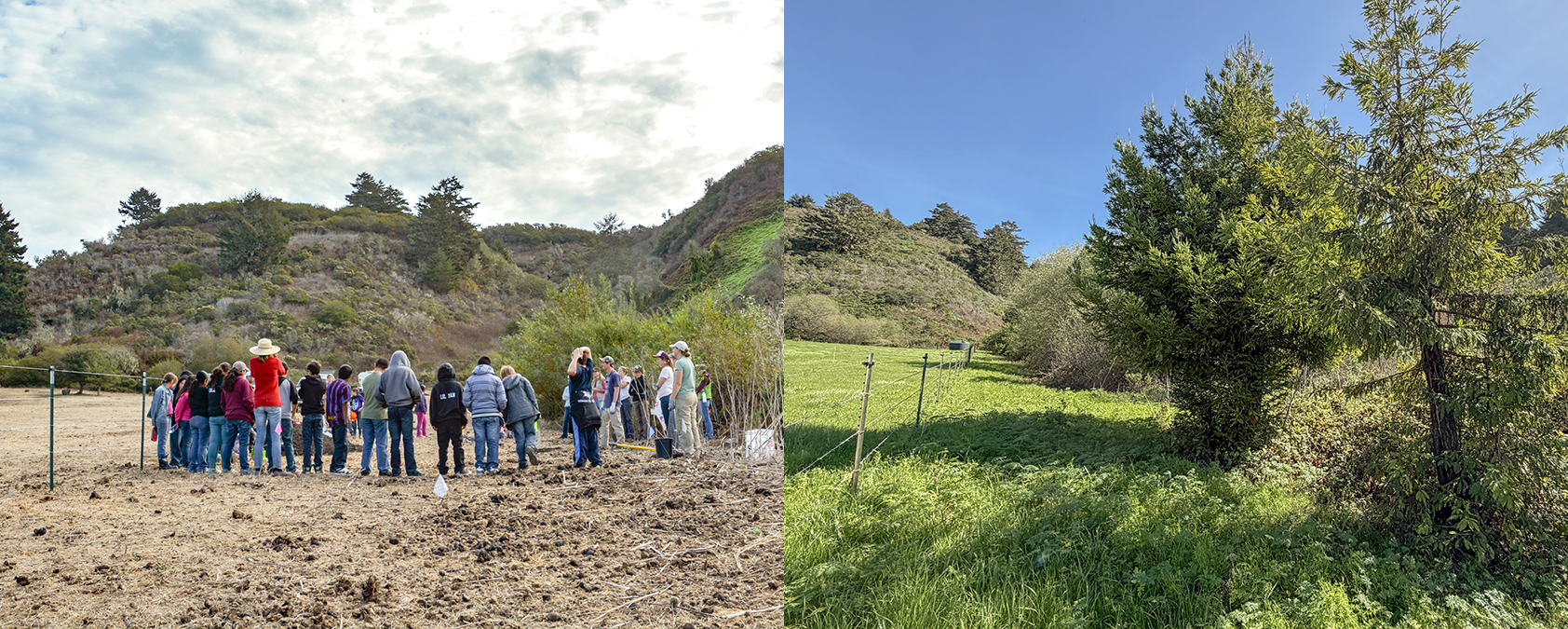
After 10 years of growth, the riparian habitat on our horse pasture looks great, thanks to local school volunteers of the 2016 STRAW Project.
Over the years, we have implemented several riparian restoration projects, including a project with Point Blue’s Students and Teachers Restoring A Watershed (STRAW) program to plant trees and shrubs along priority riparian sites. We have intentionally stuffed gullies with willows and woody materials to encourage native plant growth and capture sediment to aggrade the streambed and provide conditions for riparian forest establishment. Aside from instances of flash grazing, we have used fencing to control livestock access to riparian corridors and allow woody plants, like willows and dogwoods, to establish. We stopped mowing fields adjacent to riparian areas and allowed them to grow natural riparian buffers that want to flourish there. We stopped waging war against sections of rushes and sedges and trying to turn them back into grasslands, and instead now encourage these plants and their massive root systems to slow and filter water. We still graze riparian areas at times, but we manage these areas intentionally, pay attention to the timing of any disturbance, give these areas plenty of time to recover and breathe, and let nature do the rest.
Fast forward to 2025: while mapping our vegetation communities for the Audubon Conservation Ranching Habitat Management Plan, we identified 65 acres of riparian vegetation! This means we had met the riparian vegetation goals highlighted in our original conservation plan! This huge success means that over the last 14 years, we have been able to actively and passively restore nearly 40 acres of riparian ecosystem, providing all the amazing benefits discussed in this article: increased carbon storage, enhanced wildlife habitat, and improved water quality.
Today, TomKat Ranch has 75 acres of riparian soils found mostly on the valley floor along Honsinger Creek and adjoining gulches. Such successful restoration efforts serve as a reminder of the utility to be found in holism. While it can be easy to get caught up in the details of moving cattle, collecting data, and analyzing management activities, we can’t forget to step back and look at the landscape as a whole – and the successes that might be right in front of us!