Earlier this month at REGENERATE 2025 in Santa Fe, TomKat Ranch Educational Foundation (TKREF) co-hosted a workshop with the San Mateo Resource Conservation District (SMRCD) and Seavey Ranch
REGENERATE 2025:Cultivating Adaptability Through Peer-to-Peer Learning
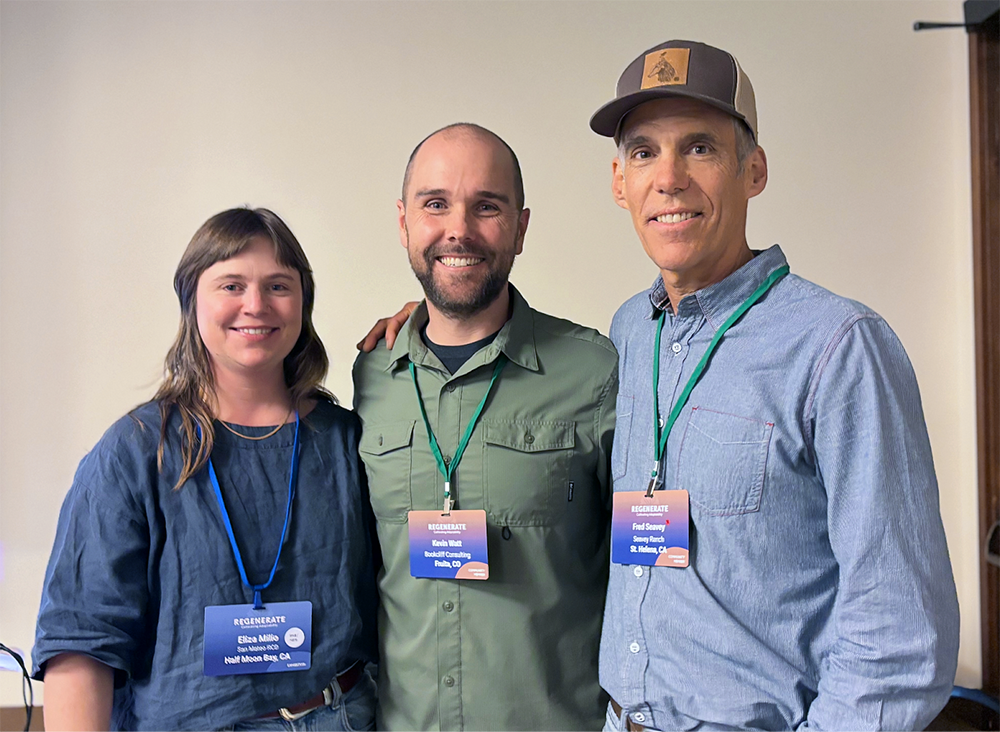
Eliza Milio of the San Mateo Resource Conservation District, Kevin Watt of TomKat Ranch Educational Foundation and Bookcliff Consulting, and rancher and course participant Fred Seavey of Seavey Ranch at Regenerate 2025.
01/21/2026
By: Kevin Watt, Bookcliff Consulting
At REGENERATE 2025 in Santa Fe in November 2025, TomKat Ranch Educational Foundation (TKREF) co-hosted a workshop with the San Mateo Resource Conservation District (SMRCD) and Seavey Ranch on a topic that sits at the heart of our mission: how communities of land stewards can help one another adapt in a time of rapid change.
The conference theme, Cultivating Adaptability, felt especially relevant as we shared lessons from Regenerative Ranching 101, a collaborative, place-based course developed by TKREF, the San Mateo Resource Conservation District, and a remarkable network of ranchers, technical assistance providers, and nonprofit partners across the Bay Area.
During our session at REGENERATE, we invited producers, educators, conservationists, and advocates into a conversation about how peer-to-peer education can help fill the widening gap in public technical assistance, while strengthening community resilience, local knowledge, and regenerative outcomes on working lands.
Why Peer-to-Peer Technical Assistance Matters Now
Across the United States, technical assistance programs have long been a vital entry point for producers hoping to improve the productivity and resilience of their land and businesses. Though demand for these resources has always been high, it continues to grow amidst increasing climate variability, shifting markets, and growing pressure to adapt rapidly. Unfortunately, capacity to meet demand for technical assistance has been shrinking due to agency workforce losses and budget uncertainty at both state and national levels.

USDA Staffing Crisis: Conservation Staff Losses Will Further Undermine Services to Farmers and Ranchers – National Sustainable Agriculture Coalition
This ongoing decline shaped the content of our workshop as presenters Kevin Watt of TomKat Ranch and Bookcliff Consulting, Eliza Milio of the San Mateo Resource Conservation District, and rancher and course participant Fred Seavey of Seavey Ranch, shared successful models they have seen. The key to success: models that do not rely on any single institution or source but result from local, trust-based networks built around shared interest in learning.
What We Heard From the Room
We shared lessons from Regenerative Ranching 101 and other programs we have hosted where we see how diverse peer-to-peer networks are helping address the growing demand and shrinking supply of technical support. Then we listened to participants describe what they need including:
- Practical support adapting grazing systems to drought
- Help designing small, low-cost experiments on their own ranches
- Regionally specific and cost-effective tools for monitoring soil, forage, and animal wellbeing
- Templates for building collaborative groups in places with limited or non-existent structures of support
- More opportunities to learn directly from fellow producers
Our goal was not just to showcase our program; it was to share what we’re learning about how knowledge moves within resilient communities of practice. This conversation reminded us that regenerative agriculture is not only a set of principles and practices, it is also a community endeavor. Whether in coastal California or high desert New Mexico, producers are hungry for the kinds of relationships that make change possible.
Many attendees shared a sentiment we hear often: “We don’t need more binders and support. We need more people and places to learn with.”
What Comes Next
At TomKat Ranch, we are committed to supporting networks, strengthening regional capacity, and helping communities cultivate the adaptability that landscapes and people need.
For those looking to adapt these ideas in their own regions, we continue to expand our Regenerative Ranching Toolkit, a collection of videos, templates, facilitation guides, and field-based resources freely available on our website. These tools were created with implementation in mind and are meant to help local groups build learning cohorts, producer networks, and on-ranch demonstrations tailored to their context.