
For decades, we’ve seen a decline in the nutrient quality of our food alongside a rise in chronic health issues.
Nutrient-Dense Food: The Soil Connection

11/18/2025
By: Kathy Webster and Wendy Millet
For decades, we’ve seen a decline in the nutrient quality of our food alongside a rise in chronic health issues. Industrial agriculture has reduced diverse ecosystems to monocultures, depleted soil biodiversity, and disrupted the natural balance that sustains the land’s ability to grow healthy crops and livestock. As soil life declines, so too does the nutritional value of our food. Since most of our food comes from the soil, it’s no surprise that unhealthy soil often leads to less nutritious food.
“The food we eat today contains less protein, calcium, phosphorus, iron, riboflavin, and vitamin C than food produced just a half-century ago.” (Rodale Institute)
The good news is that food grown in healthy, biologically active soils—by farmers and ranchers using regenerative principles—has been shown to contain higher levels of essential nutrients, especially micronutrients like minerals, antioxidants, and other phytonutrients.
How Soil Microorganisms Contribute to Plant Nutrition, and Ultimately, Human Health
Beneath every thriving pasture, garden, or field lies an extraordinary biome teeming with life. A single teaspoon of healthy soil can contain more living organisms than there are people on Earth. These unseen partners—bacteria, fungi, protozoa, and countless others—form a vast, living network that quietly sustains life above ground. Here’s how:
Nature’s Original Recyclers
Soil microbes are constantly at work breaking down organic matter—fallen leaves, decaying roots, and plant residues—and transforming it into nutrients for plants. In return, plants feed these microbes with carbon-rich sugars produced during photosynthesis. This underground exchange fuels a continuous cycle of growth, decomposition, and renewal, keeping soil fertile and ecosystems resilient.
The Hidden Partnerships Beneath Our Feet
Some microorganisms form powerful alliances with plant roots. Mycorrhizal fungi, for instance, create vast underground networks that extend far beyond the plant’s natural root zone, helping the plant access water and essential minerals. Phosphorus-solubilizing bacteria perform a similar service, unlocking nutrients bound tightly in the soil and making them available for plant uptake. Together, these partnerships make plants stronger, more nutrient-rich, and more resilient in challenging conditions.
Microbes, Metabolites, and the Food on Our Plates
Microbes don’t just feed plants—they influence the quality of the food we eat. Many soil microorganisms produce natural compounds such as hormones, enzymes, and antioxidants that boost plant growth and strengthen immune responses. The result is food richer in flavor, appearance, and nutrition. In this way, the biodiversity beneath our feet upcycles nutrients to plants, animals, and eventually to the food on our plates.
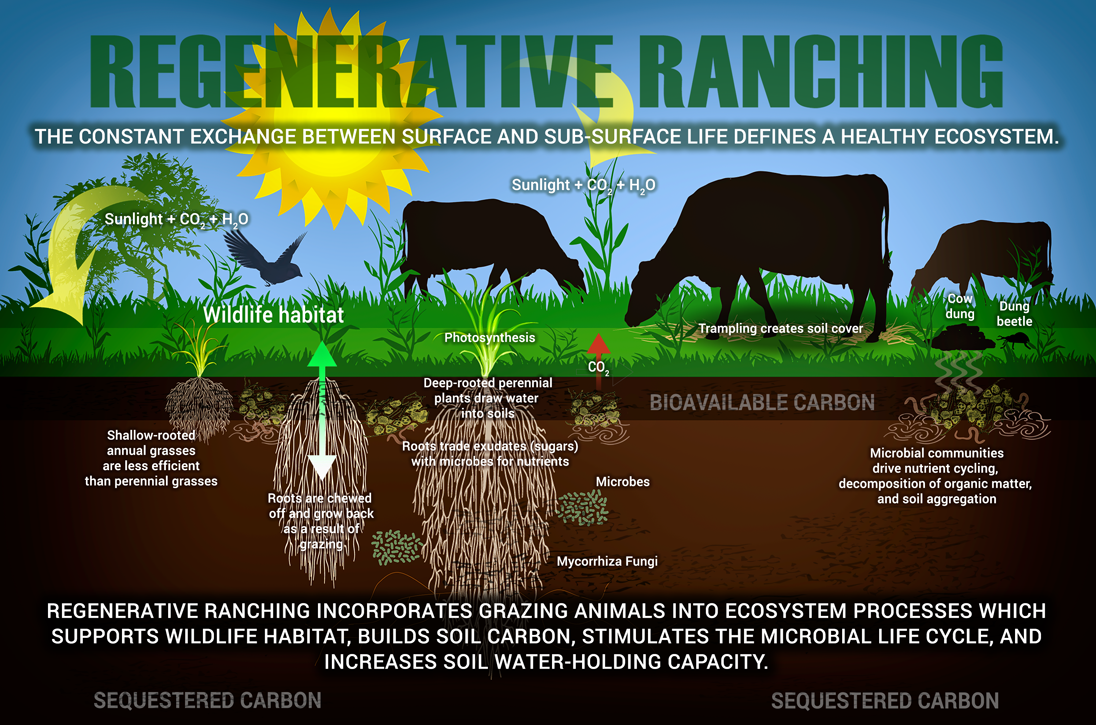
The graphic shows a living system from sunlight to soil, highlighting how surface-subsurface interactions sustain biodiversity and soil function. It depicts how grazing animals, microbes, and fungi all contribute to carbon sequestration, soil regeneration, and nutrient up-cycling. This continuous exchange not only restores ecosystems, sustains wildlife habitat, creates channels for water infiltration, but it also produces nutrient-dense foods.
Regenerative Agriculture and Nutrient-Dense Beef
We recently participated in a research study exploring how agricultural practices affect the nutritional quality of beef. The results are encouraging: cattle raised on diverse pastures, using adaptive multi-paddock grazing, can produce more nutrient-dense meat.
The increase in nutrients is linked to soil health and the diversity of forages cattle consume. Different plants contain unique compounds called phytonutrients that support plant health. When animals eat these plants, those same beneficial compounds can be found in their meat. Our cattle are grass-finished on diverse pastures, so we were not surprised to see the study results showing that our beef contains two to three times more omega-3 essential fatty acids than conventional grain-finished beef.
Beef isn’t just a protein source. When we choose meat from ranches with diverse pasturelands, we’re getting more than macronutrients. We’re eating food that’s packed with vitamins, minerals, healthy fats, and phytonutrients (antioxidants, isoflavones, lignans, phytosterols)—a micro-nutritional powerhouse. Omega-3s, for example, are widely recognized for supporting heart health and reducing inflammation.
Why Micronutrients Matter
Micronutrients are essential for our health, yet many Americans are deficient in key vitamins, minerals, and phytonutrients. These plant-based compounds help protect plants from disease. When we eat them, we gain similar benefits—antioxidant and anti-inflammatory protection, heart and immune support, and even anti-cancer properties.
While plants are the foundation of phytonutrient diversity, animals raised in nutrient-rich ecosystems pass along the benefits of the plants they eat on to us.
The Bottom Line
We can enjoy a more nutrient-dense diet when we choose food—plant or animal—grown in harmony with nature. Supporting regenerative farmers and ranchers means supporting soil health, ecosystem health, and ultimately, human health.
Healthy soil truly is the foundation of healthy food.