
For the past 15 years, a new scientific understanding of our climate has been building across a diverse range of disciplines.
The Water Cycle, Part 1 of 3: Is Water the Real Key to a Stable Climate?
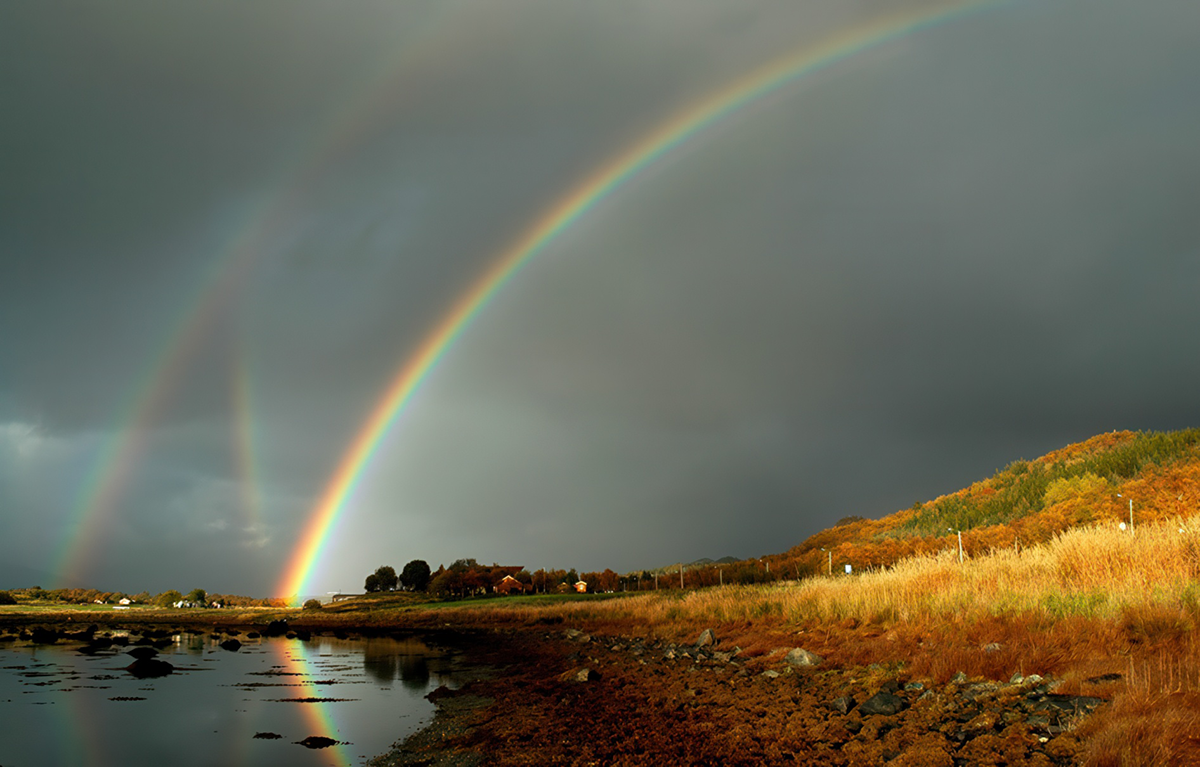
Rare double rainbow during a rain event
(photo: https://www.usgs.gov/media/images/multiple-rainbows-seen-once-a-rarity)
08/19/2025
By: Dakota Glueck and Wendy Millet
For the past 15 years, a new scientific understanding of our climate has been building across a diverse range of disciplines. This consensus is based on research in climatology, earth systems, biogeochemistry, and biology. The development of this new understanding has been slow, as it relies on the work of academics in disparate fields as well as insights from land managers working on the ground.
Put simply, the new paradigm states that the climate we experience is a co-creation of atmospheric chemistry, including anthropogenic emissions, and the Earth’s biological systems. The fulcrum of this co-creation is the water cycle. Here is how it works: water in the atmosphere, on land, and in the oceans holds much of the Earth’s excess energy, trapping it through the greenhouse effect. When the water cycle is functioning properly, however, it helps to distribute that energy across the Earth’s surface, keeping surface temperatures cool, plants growing, and the rain falling.
Scientists and practitioners who embrace this paradigm are finding new ways to address the climate crisis and realizing that nature-based solutions (especially those that restore biological integrity, revegetate landscapes, and restore the water cycle) can soften the worst impacts of climate change through pathways focused on restoring landscapes and the Earth systems that make those landscapes function.
Millán M. Millán is often credited as the father of this new paradigm. In the early 2000s, while head of the Centro de Estudios Ambientales del Mediterráneo (CEAM), the European Commission asked him to investigate why afternoon summer thunderstorms, so common to Spain’s Mediterranean climate, had largely disappeared since the middle of the 20th century.
Dr. Millán identified a surprising cause: conversion of coastal wetlands and coastal oak forests to make way for agricultural and urban expansion. Without forests, Spain’s land became hot and dry, creating high-pressure atmospheric conditions that prevented the Atlantic Ocean’s cool, moist air from flowing over the peninsula. Moisture from wetlands, which once served as humid low-pressure corridors for sea air to flow onto the land, was also lost. (Development of coastal wetlands is a global phenomenon. In California, 90% of historic coastal wetlands have been developed.)
The resulting reduction of sea air didn’t entirely explain the reduction in storms. Dr. Milan also found that although some moisture still flowed in from the coast, the absence of water vapor from 1) evapotranspiration by forests and 2) steam from wetlands meant the threshold of atmospheric moisture required for rain generation could not be reached as the little bit of available moisture in the air was simply blowing across the Iberian Peninsula rather than falling as rain.
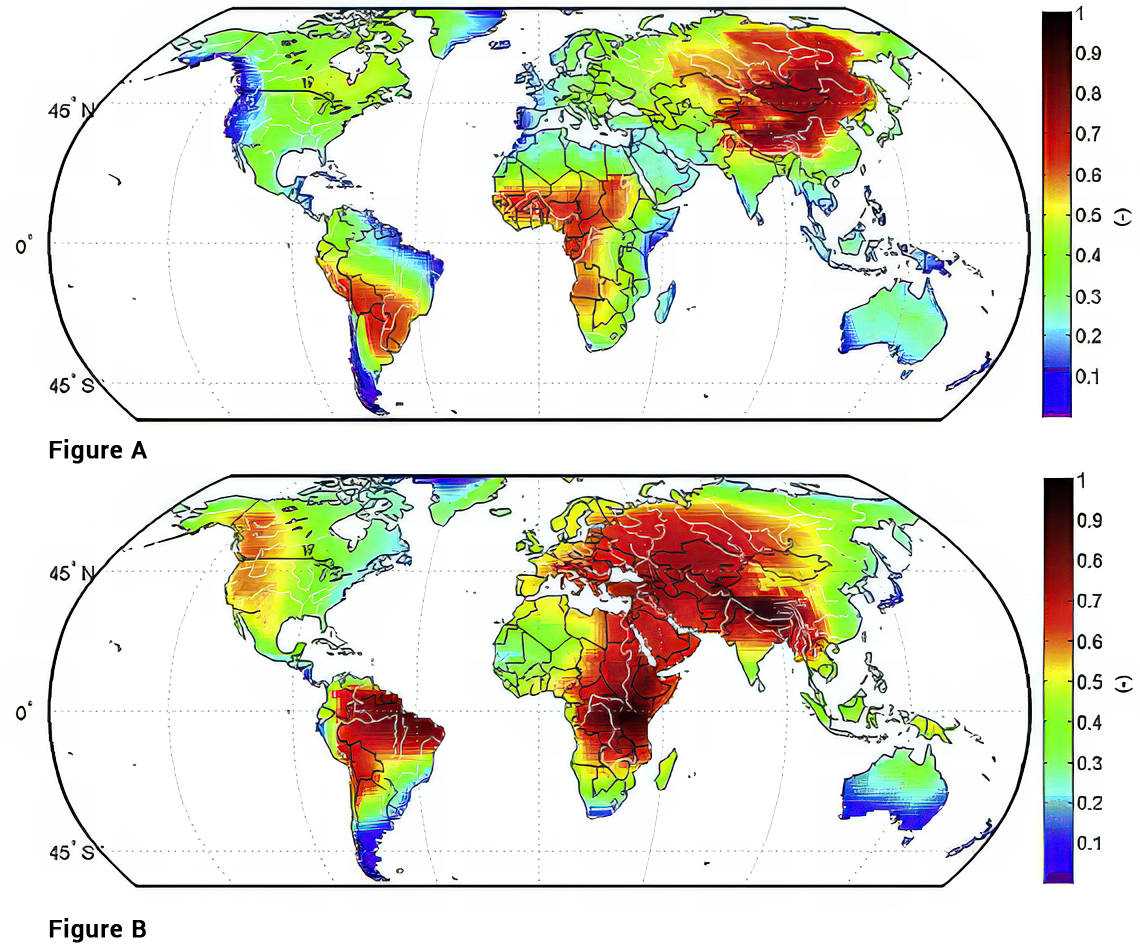
Figure A demonstrates the ratio of recycled (accumulated and then evaporated) precipitation various regions rely on for rainfall. Rainfall comes from evaporated moisture from other parts of that same continent.
Figure B demonstrates areas responsible for providing the recycled moisture that will fall in other regions of the continent.
(Source: Origin and fate of atmospheric moisture over continents)
Key Insights of this New Understanding
First:
Land use change, a euphemism for the industrial-scale destruction of ecosystem function, profoundly affects the “large water cycle.” Ecosystems on the ground play a formative role in the function of the large water cycle, the inflow of moisture from the oceans to the continents, its retention on land, and its eventual return to the ocean.
Second:
The “small water cycle” describes the movement of water from the atmosphere down to the earth as rain, its retention in the soil, and its movement back into the atmosphere through evaporation and transpiration by plants. This cycling is essential in continental climates.
At TomKat Ranch, we understand that our regenerative practices can enhance “effective rainfall” (the amount of rainfall that infiltrates into the soil), allowing the rain to sustain the small water cycle, support photosynthesis, and help regenerate vegetative cover.
In 2010, scientists Van Der Ent and Savenije mapped the intensity of the small water cycle, showing that the farther one moves from the coast, the more times each molecule of water cycles from the sky to the earth and back again.
Their research showed that this cycle commonly happens many times before those molecules return to the ocean, with 57% of evapotranspiration being recycled globally. We have also discovered that recycled water comprises 30-50% of the total water in many continental climate systems.
The effects of land management on the small water cycle are profound. While overall water vapor in the atmosphere is increasing globally due to the effects of the warming Earth, the destruction of functional ecosystems can decrease the amount of moisture in the atmosphere regionally and increase the speed at which moisture is lost from soils.
To support the small water cycle, regenerative agriculture practitioners have long promoted healthy, porous soils by protecting the soil with organic litter and keeping plants alive and respiring for as much of the year as possible. When vegetation is removed, it leaves soils bare or capped, increasing runoff and contributing to drying out entire regions of Earth’s continents.
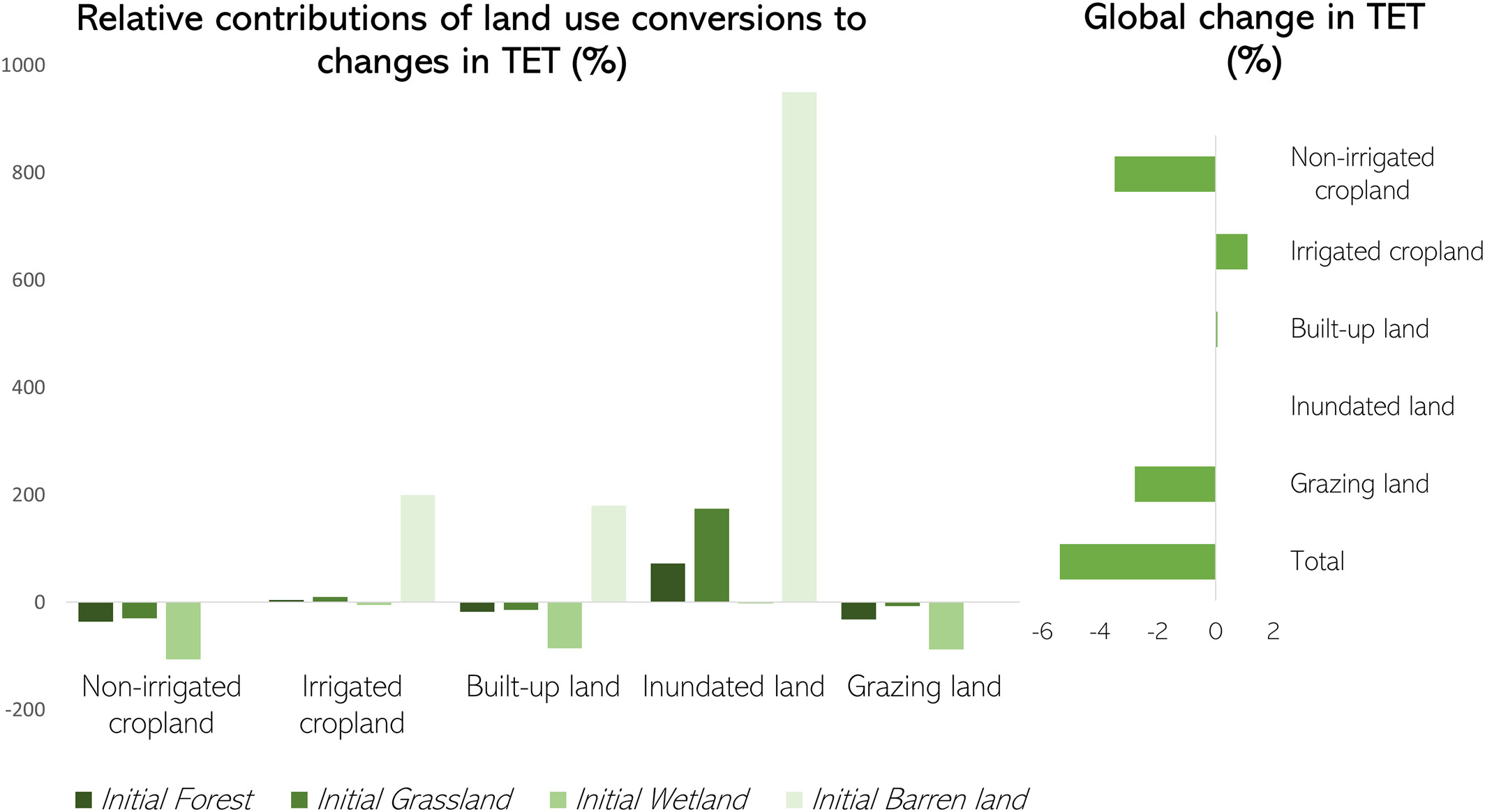
Contributions of various LUC (Land Use Changes) to changes in TET (Total Evaporation and Transpiration). The horizontal graph on the left shows the relative contributions of land-use conversions (from initial to anthropogenic land cover) to changes in global total evaporation and transpiration. For example, converting barren land to inundated land increases TET over that area by >900%. The vertical graph on the right shows the normalized contributions of the different land-use conversions to the global change in TET (%). It shows that conversion to nonirrigated croplands has reduced global TET by nearly 4% (data derived from Sterling et al. [2013]).
Note from TomKat Ranch: Although not stated, the effects referenced here to global change in TET from grazing, based on our experience and other research, are more than likely the result of conventional, set-stock over-grazing conditions. Holistic planned grazing aims for regenerative conditions with zero impact on a landscape’s natural TET.
Third:
Another way that ecosystems influence the climate is through biological cloud condensing nuclei (bio-CCN), the molecules in the atmosphere around which every drop of rain forms and moves from vapor to a liquid state. We have always known that plants need the rain, but we have also discovered that the rain needs plants too.
Until the 1970s, the conventional view of CCN was that they were abiotic: ice crystals, salt crystals, and dust were believed to be at the heart of every raindrop. However, in the 1970s, this paradigm was upended when scientists discovered that some bacteria living symbiotically on the stomata of plant leaves are carried aloft during photosynthesis and help form raindrops. That bacteria can condense rain at higher temperatures than abiotic-CCN, making them more efficient and critical in tropical ecosystems. They also discovered that many other biological materials serve as cloud condensing nuclei: the spores of some fungi, pollen, and volatile organic compounds all help to make the rain.
Climate scientists have started to look carefully into these cycles—exploring natural experiments where landscape-level devegetation and revegetation have occurred—and their impact on rainfall. They have also begun to model the effects of revegetation at both local and continental scales. The body of evidence is small, but strong and growing: Restoration of both large and small water cycles can increase rainfall, but even more profoundly, it can increase the frequency of precipitation events and decrease their severity. Instead of droughts followed by megastorms and floods, restored small and large water cycles promise more regular, gentle rain—the type that promotes life, revegetation, and landscape resilience.
Fourth:
Water on the landscape serves as a mediator of regional temperatures. While the climate crisis is being experienced as extreme weather events that immiserate people, drive climate migrations, and cause economic disruptions, this new paradigm offers a means to ameliorate the extremes of drought, flood, and heat.
When sunlight hits a dry, unvegetated surface, even those that are reflective, like light-colored sand, most of the sun’s energy is transformed into sensible heat. In contrast, when sunlight hits a hydrated landscape with green growing plants, the sun’s energy drives photosynthesis, whereby plants transform liquid water into water vapor. The water vapor then enters the atmosphere, where it releases that energy when the water vapor condenses back into rain. This process, known as hydraulic cooling, is the reason why it is always cool in the shade of trees and why ancient cities cooled their plazas with fountains. Hydraulic cooling works on a larger scale, too.
Restoring ecosystem function can heal the water cycle, promote more frequent life-sustaining rains, and cool the land, making it a more hospitable place. This is the virtuous cycle that regenerative land managers seek to harness by healing soil.
According to Dr. Millán, the climate we experience is a function of ecosystem health; it’s a two-legged stool balanced on the atmosphere and biosphere. As he describes it, “Water begets water; soil is the womb, vegetation is the midwife.”
At TomKat Ranch, we support both legs of the stool by embracing ecosystem restoration with regenerative land management at its heart. Healing ecosystems offers the opportunity to reduce climate extremes and keep whole regions of the earth hospitable to life. Regenerative land management offers the opportunity to do all this work while restoring rural economies and livelihoods.
Land management and restoration are about more than carbon accounting. Nature-based solutions that restore ecosystem function at vast scales can help stabilize the local climate. This work is necessary; the time is now.
Cited Resources
- Millán, Millán M. “Extreme Hydrometeorological Events and Climate Change Predictions in Europe.” Journal of Hydrology, vol. 518, 2014, pp. 206-224, doi:10.1016/j.jhydrol.2013.12.041.
- Van Der Ent, R. J., et al. “Origin and Fate of Atmospheric Moisture over Continents.” Water Resources Research, vol. 46, no. 9, 2010, doi:10.1029/2010wr009127.
- Vali, Gabor, and Russell C. Schnell. “Looking Back: An Account of How Ice Nucleation by Bacteria Was Discovered (1963 to About Mid-1980s). Part I: The Basics.” Bulletin of the American Meteorological Society, vol. 105, no. 4, 2024, pp. E778-E788, https://journals.ametsoc.org/view/journals/bams/105/4/BAMS-D-23-0114.1.xml.
- Schnell, Russell C., and Gabor Vali. “Looking Back: An Account of How Ice Nucleation by Bacteria Was Discovered (1963 to About Mid-1980s). Part II: Broadening the Scope.” Bulletin of the American Meteorological Society, vol. 105, no. 6, 2024, pp. E1004-E1014, https://journals.ametsoc.org/view/journals/bams/105/6/BAMS-D-23-0115.1.xml.
- Wierik, S. A. T., et al. “Reviewing the Impact of Land Use and Land‐Use Change on Moisture Recycling and Precipitation Patterns.” Water Resources Research, vol. 57, no. 7, 2021, doi:10.1029/2020wr029234.